Protecting Italy’s Natural Reserves
Italy
Overview
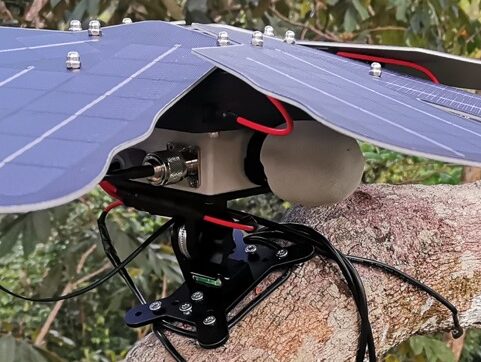
RFCx is collaborating with WWF Italy and Huawei Italy to deploy an acoustic monitoring system that enables WWF Italy and local partners to monitor illegal activities at sites at Riserva Naturale Cratere degli Astroni (a natural reserve created around an extinct volcano), Orbetello (a peninsula in Tuscany), and Burano (an island in the North Venetian Lagoon) to develop a comprehensive understanding of the biodiversity present. Guardian installation sites are being chosen for both illegal activity detection and biodiversity monitoring.
Partners
World Wildlife Fund
Huawei Italy
Objectives
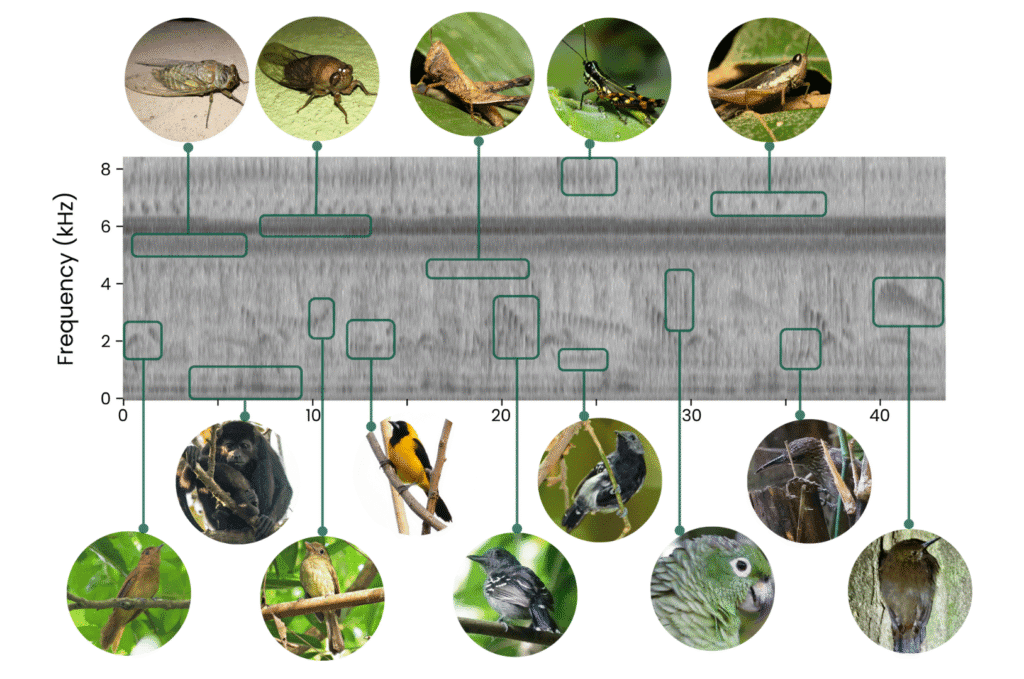
The primary goal of this project was to create a model capable of automatically recognizing the vocalizations of bird and frog species in Italy.
Implementation
The three sites are protected with 10 networked Guardian devices and 45 offline edge Audiomoth devices. Alongside the Guardians, the Audiomoths help fulfill the second function of the monitoring system: studying animal species based on their calls. Listening to animal vocalizations can identify different species, monitor their distribution and populations, and identify factors that disturb them, including the effects of climate change.
Impact
Impact:
Since deployment in August 2021, the Guardian system has detected and analyzed an extensive volume of audio data.
2,000 Real-time reports of possible illegal activity
870,000 Audio recordings of animal vocalizations
49 species of birds and mammals identified
30 field checks prompted
Moreover, in December 2021, the Nature Guardian system in Astroni Crater led to the identification and destruction of an electroacoustic device designed to help bird poachers.
Challenges:
Few Configuration files of the sites with empty audios: I can confirm that nearly every site had this problem with empty audios during the first deployment round, mostly at the deployment’s end. Configuration files should be the same for every site unless the very first deployment. which for some sites was set at 55 seconds of recording (this was corrected for the second deployment after your indication): but this was not unfortunately true. One crucial settings was indeed different
(Low-voltage cut-off” was not enabled in every configuration, and I feel this might have influenced the devices behaviour near the battery depletion.)
Battery charging issues- resolved after RFCx sent new battery chargers.