Peru
Protecting Peru’s Tambopata National Reserve


Overview
This project was a collaboration between local partners SPDA - an Environmental Law NGO, Rainforest Connection, and IUCN NL in Tambopata National Reserve and its buffer zone, in the South East Peru Region Madre de Dios, which is by far considered the biodiversity capital of Peru.
Rainforest Connection received a generous fund from the IUCN and Stichting Otterfonds to work with SPDA and the Environment Defenders to protect their concessions from illegal logging and incursions.
The goal was to increase coverage of the monitored area, improve the safety of environmental defenders so they can continue to fight on the front lines for a just world that values and conserves nature, and improve monitoring. Protection of the buffer area of the Tambopata National Reserve through the deployment of autonomous acoustic monitoring technology, leveraging big data to enable SPDA and the Local Environment Defenders to protect threatened rainforests in real-time, was also part of that goal. The Guardian is also capturing forensic evidence of illegal activity that can be submitted to the government and local authorities as proof of incursions. In addition, it supports and strengthens collaboration among local communities, empowers local partners, improves protection and law enforcement, and enhances the safety of Environmental Defenders.
Partners
Local partners SPDA - an Environmental Law NGO
IUCN NL

Objectives
Improve monitoring and protection of the Tambopata National Reserve through the deployment of autonomous acoustic monitoring technology, and support and strengthen collaboration amongst local communities, empower local partners, enhance protection and law enforcement, and improve the safety of Environmental Defenders.
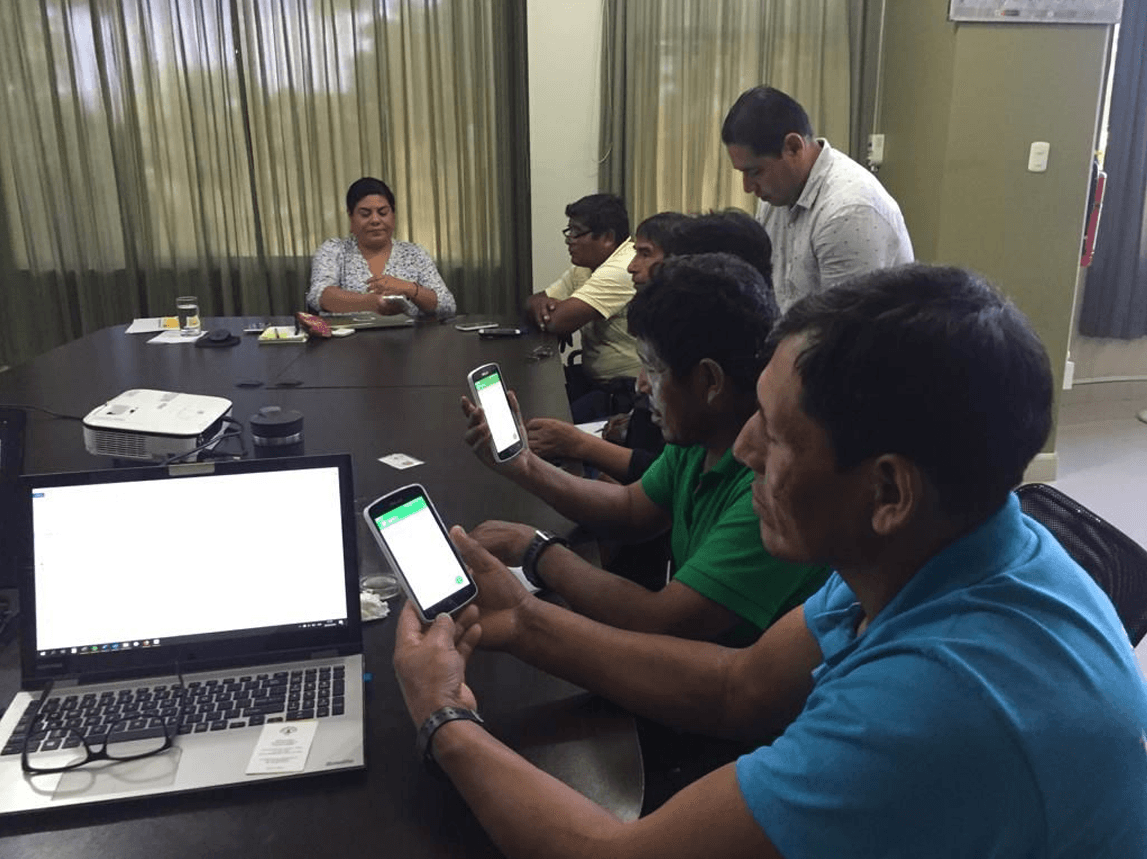
Above: Defenders trying out the RFCx Ranger Application
Implementation
The RFCx team supplied SPDA with 12 new smartphones, which were then given to the Defenders to access the RFCx Ranger Application.
Defenders were trained and given access to the RFCx monitoring system to organize and coordinate responses/interventions as forensic evidence.
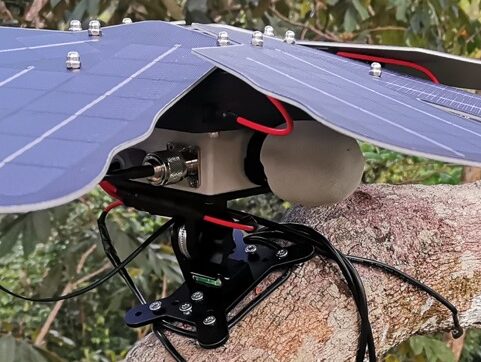
A new foil casing was developed for the Guardians, and the softer rubber elements of the Guardians were wrapped in this casing to protect them from termites that attacked the rubber insulation surrounding the cables and microphone windscreens.
A reconnaissance drone was given to the Infierno community to support perimeter monitoring. The Defenders were also training on using the drone to monitor the large territory.
4 small repeaters were also provided to SPDA and the Defenders to enhance connectivity within their concessions, enabling them to communicate more effectively with SPDA.
SPDA is also using the alerts data for their legal cases.
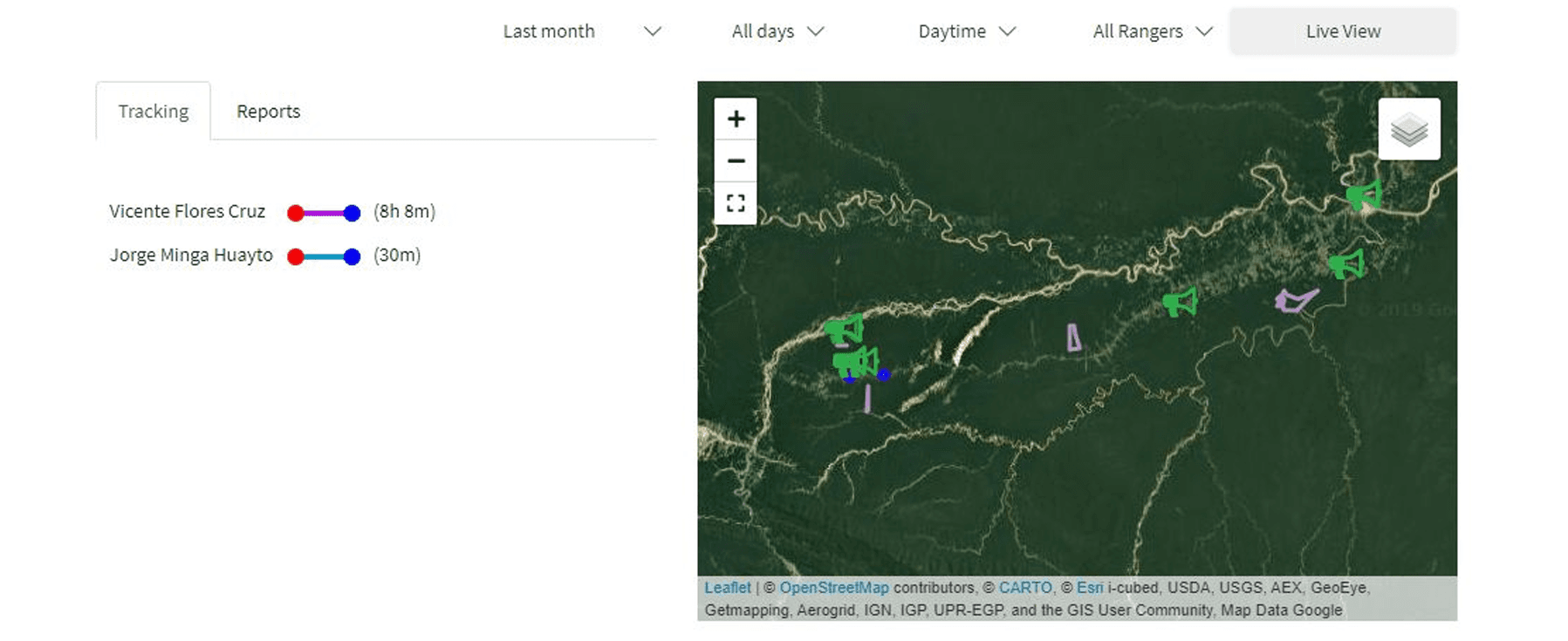
Above: Snapshot of Environment Defenders testing the location tracking feature on the RFCx Ranger App
Outcomes / Challenges
Outcomes:
Expected decline in destructive/illegal activity and safer operation for park guards
Better policy and more effective protection
Prosecution of illegal logging
Better chance of planned intervention
Improved understanding of biodiversity and human activity
Forensic evidence used by law enforcement and environmental prosecutors
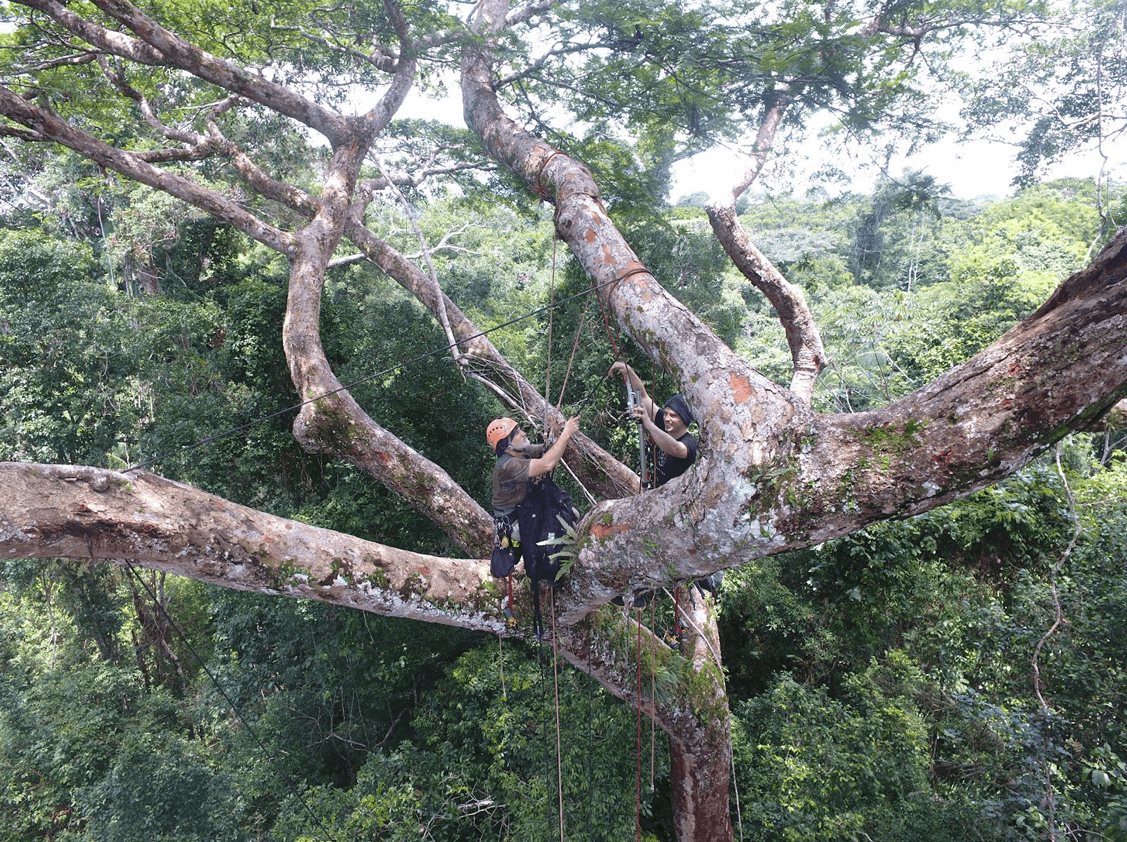
Finalized with SPDA, the mapping of key strategic locations for monitoring and installing permanent RFCx Guardians was completed in close coordination with the Defender committee.
Manufactured and installed 20 RFCx Guardians.
RFCx alerts were used to stop illegal logging in real time and as forensic evidence in court cases.
Created a customized user console that serves as a data pipeline for sharing data and alerts with SPDA.
Initial system training for the SPDA team was completed, during which the team gained access to the RFCx dashboard for customized alert filtering and response.
As of 2018, the Tambopata project is supplying approximately 7,000 hours of data per month to the RFCx Audio Ark library.
Formed close relationships and an understanding with the Defenders of all concessions, which was critical for community buy-in and support.
Deep understanding of the requirements, local challenges, and terrain, which will allow for quicker expansion and aid in the monitoring and protection of a larger area.
Additional awareness was generated for the project through media coverage, newsletters, interviews, and even award submissions, where it won the public award for best innovation (Spindle Award).
Challenges:
The lack of sunlight proved to be a challenge, which left the devices offline for periods of time. This had a direct impact on connectivity; however, there was no data loss, and the information stored in the cloud was accessed via the console dashboard.
Post-installation, certain Guardians were not witnessing activity; therefore, the decision was made to change the location of these devices.
To match an ambitious start date, RFCx chose to deploy an older version of the Guardian hardware, which includes some limitations in connectivity and power management. This has led to more “downtime” than hoped for (especially in the rainy season).