Panama
Advancing Biodiversity Research on Barro Colorado Island


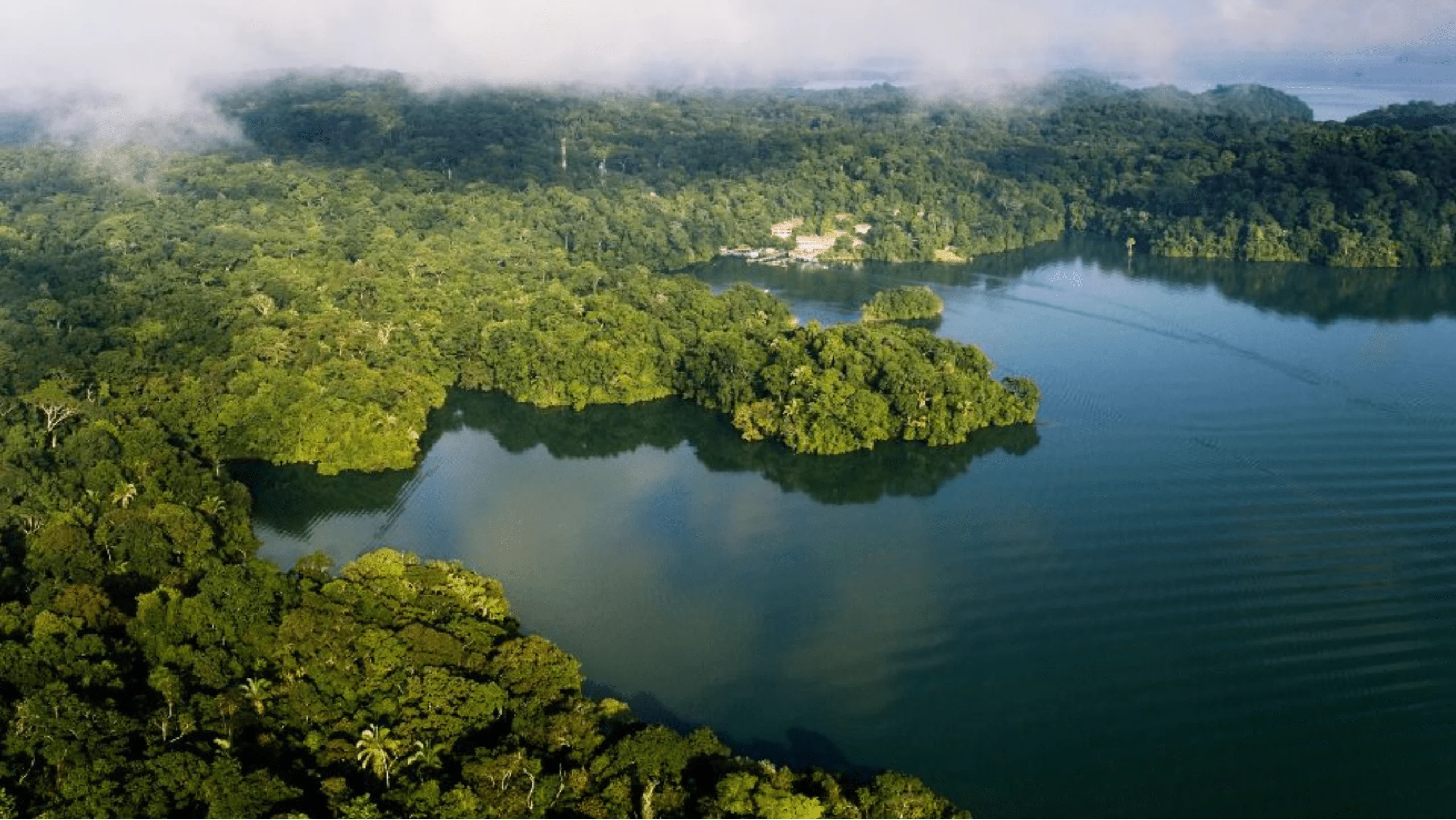
Overview
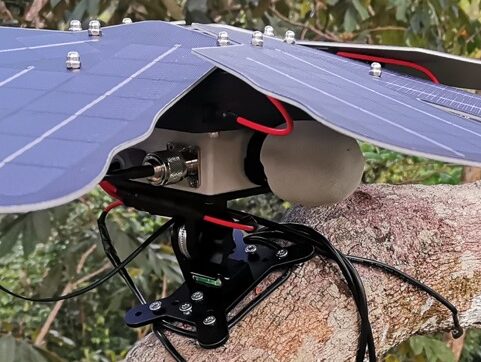
In 2017, Rainforest Connection (RFCx) partnered with Microsoft AI for Good Research Lab and the Smithsonian Tropical Research Institute (STRI) to enhance biodiversity monitoring on Barro Colorado Island, one of the world’s most intensively studied tropical forests. The project leveraged acoustic technology to support long-term ecological research and conservation efforts.
Partners
Microsoft AI for Good Research Lab
Smithsonian Tropical Research Institute (STRI)


Objectives
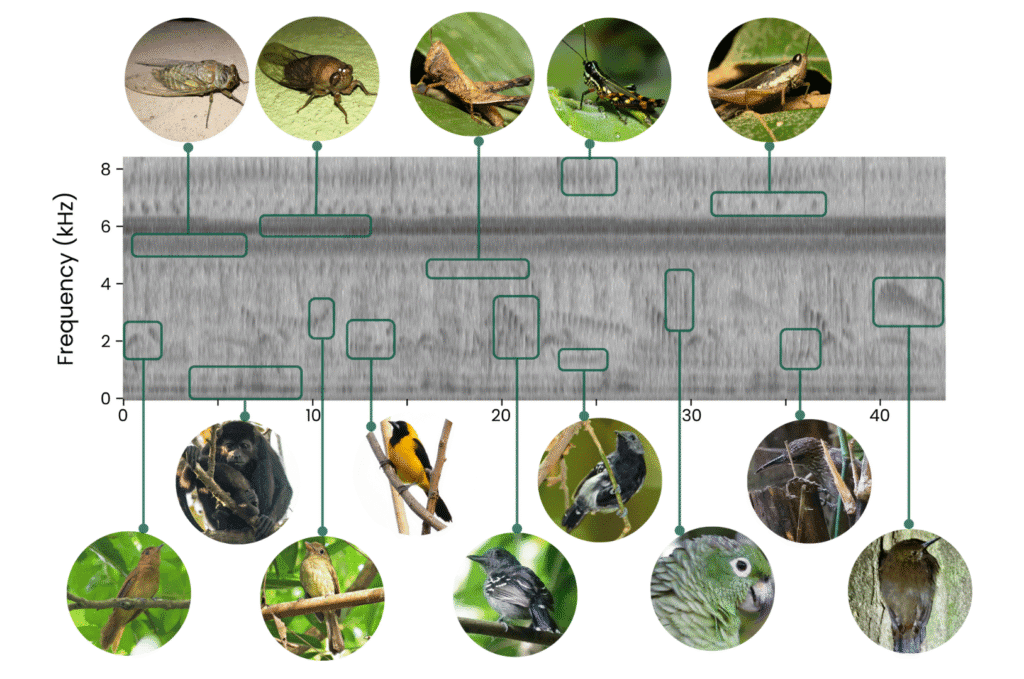
Develop a convolutional neural network (CNN) for identifying ~100 species of birds, ~30 species of amphibians, and 3 species of monkeys in field audio recordings from Barro Colorado Island (BCI), Panama.
Research will focus on creating a generic pipeline for identifying known species and discovering new ones.
The goal is for the final product to be user-friendly, making it accessible to a wide range of users who will vary greatly in their AI knowledge and programming skills.
In addition to creating the CNN, the pipeline will include the ability to identify and remove known species, apply autoencoder analyses to cluster similar unknown calls, perform data augmentation to increase the sample size of rare species, and provide annotation tools to assist in the identification of new species. To make this complex pipeline accessible to all potential users, we will concurrently build the front end to receive feedback from the user community.
Improve long-term biodiversity monitoring of 1000s of species worldwide by creating a user-friendly data analysis platform that provides scientists, wildlife managers, conservationists, and public and private environmental organizations with the information they need to make informed conservation and management decisions. To ensure the pipeline is used by the community, we will publish scientific articles, share the code, implement it in the ARBIMON platform, provide workshops at scientific meetings, and partner with organizations with global reach to promote its use.
Implementation
In phase 1, we created a convolutional neural network (CNN) to identify ~100 known bird species, ~30 amphibian species, and 3 monkey species in >100,000 1-minute field audio recordings from Barro Colorado Island (BCI), Panama. To complete this task, we used tools developed to generate training/testing data sets for each species.
In phase 2, we created a pipeline that will identify known species, mark unknown sounds, cluster them based on feature similarities, and provide the user with annotation tools to classify new species.
In phase 3, we excluded subsets of known species from the BCI-CNN and tested the pipeline's ability to discover them. In these tests, we used recordings that were thoroughly annotated, so we know which species are present and which should be “discovered” when they are left out of the CNN.
In phase 4, we made the generic pipeline available to the community through publications, sharing the code on GitHub, implementing the pipeline in the ARBIMON platform, and providing workshops at scientific meetings.
Outcomes / Challenges
The specific outcomes of this project are not available to us at this time.