Chile
Protecting the Darwin’s Fox in Chile’s Nahuelbuta Mountain Range


Overview
Nahuelbuta is defined as the territory of the Coastal Mountain Range located between the Biobío River to the north and the Imperial River to the south in Chile, generating species assemblages that combine elements from the 3 most relevant surrounding ecosystems: the Mediterranean forest, the temperate or “Valdivian” forest, and the Patagonian Andean forest, along with some endemic species unique to the Nahuelbuta Mountain Range (Smith-Ramirez 2004).
Currently, about 70% of the original native forest cover has been lost, mainly due to agricultural expansion at the beginning of the 20th century and forestry expansion since the 1970s. This has left approximately 200,000 hectares of native forest, which is highly fragmented and, in some cases, has limited chances of recovery. These drastic changes have caused this ancient forest territory to suffer from drought, desertification, biological invasions, and pollution of its watercourses (Wolodarsky-Franke & Díaz 2011).
Among the various existing tools to assess how the ecosystems of the Nahuelbuta mountain range have changed, we proposed the use of bioacoustic tools, specifically the analysis of bioacoustic diversity and the detection of vocalizations of some native wildlife species, which we suggest could serve as indicators for different levels of landscape naturalness (Rüdisser et al. 2012), based on the calculation carried out for the study area. The reason for choosing bioacoustic analyses is the possibility of studying wildlife behavior in the Nahuelbuta ecosystems while minimizing human presence in natural ecosystems (Penar et al. 2020), which we hope can improve the detection of some species that are very difficult to observe, such as Darwin’s fox and certain amphibians and diurnal raptors.
The goal of this project is not only to stop the illegal logging of their habitat from sound, but also to understand where this fox is present by creating an AI model to detect that call. This will enable our partners on the ground to better conserve and restore the foxes’ native habitat, promoting their revival.
Partners
HUAWEI (Chile)
Forest Ethics Foundation / Ética en los Bosques (EEB)

Objectives
Bio-acoustic monitoring of Darwin's Fox
Analysis of bioacoustic diversity and the detection of vocalizations from some native fauna species
To better understand biodiversity patterns in the region
Use acoustic species detections and soundscape analyses to
Assess the presence and distribution of bird species and the environmental factors influencing them.
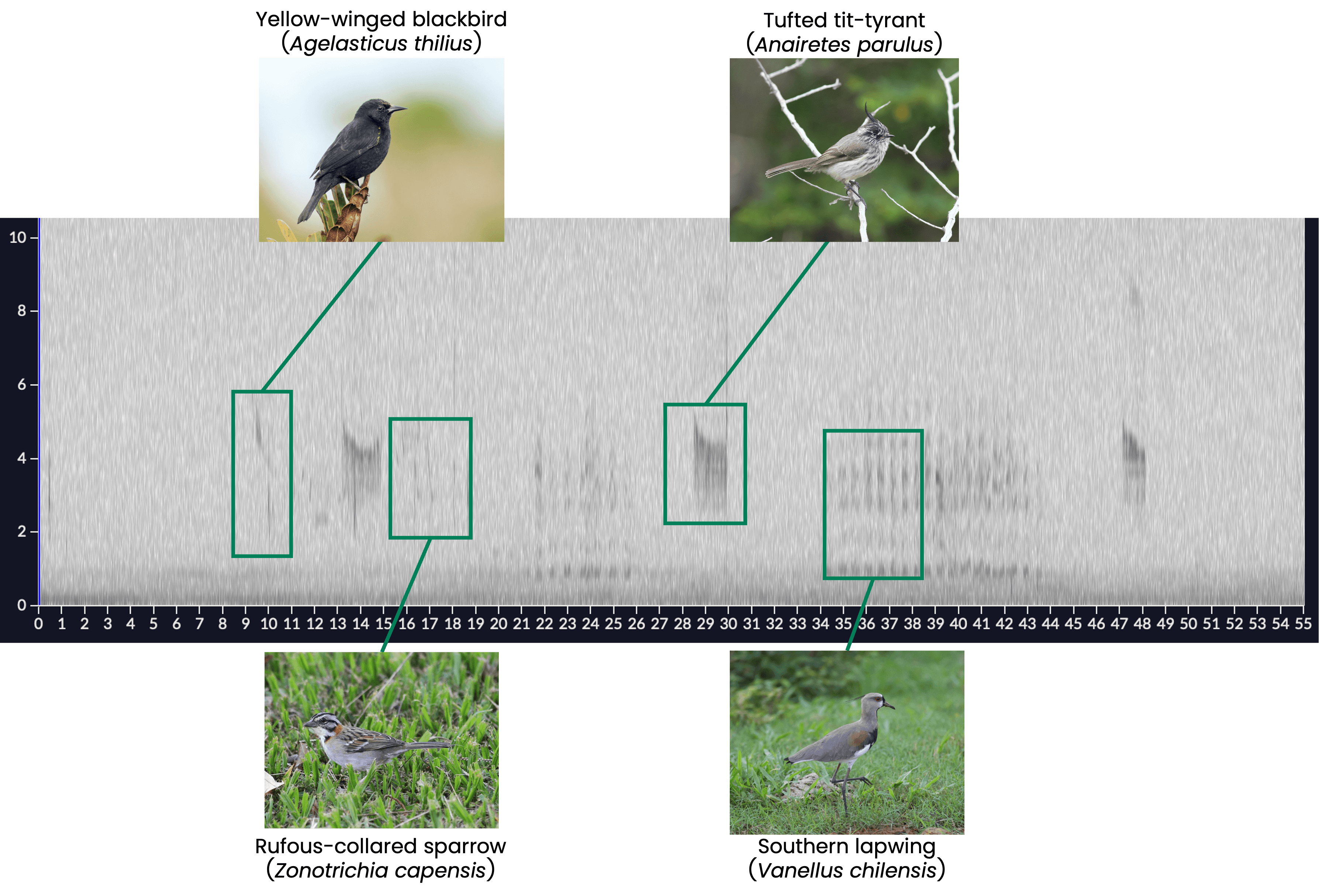
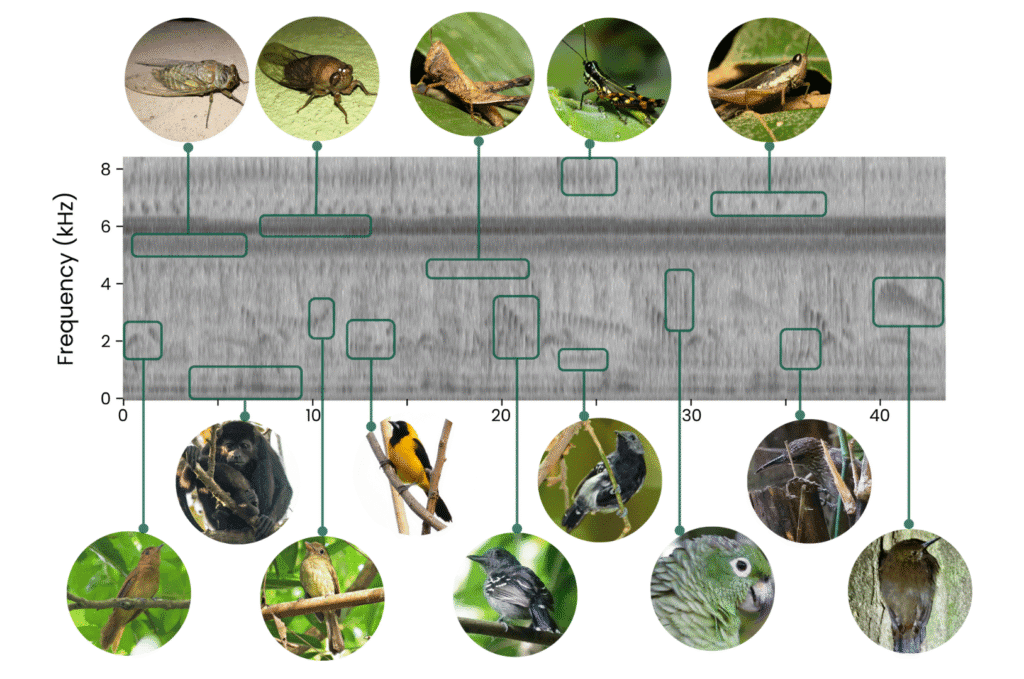
Above: Spectrogram with species
Implementation
Following the removal of the equipment from its initial installation site, carried out at the end of 2020 in conjunction with the RFCx team, it was necessary to reassess the availability of sites for bioacoustic monitoring of Darwin's Fox. To this end, exploratory visits were conducted earlier this year at the Caramávida High Conservation Value Area and Nahuelbuta National Park.
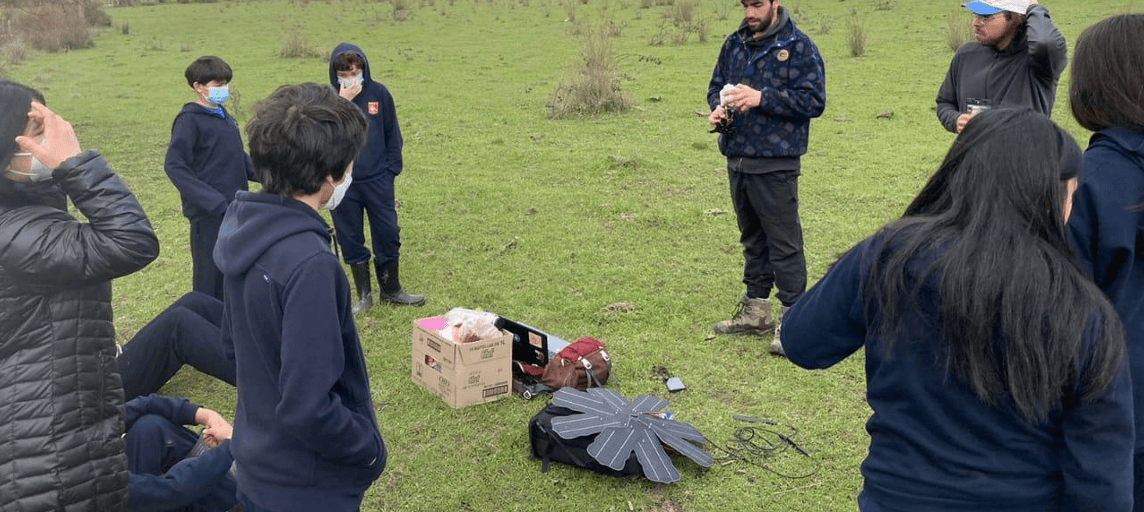
The installation process took five days: 3 for installation and 2 for configuration adjustments.
The study area encompasses the basins of the Caramavida, Purén, and Picoiquén rivers.
8 land cover types were selected, which come from the land use and vegetation inventory of the years 2014-2015 (CONAF, 2015), which were considered to have a direct impact on the development of biodiversity and its processes (Millennium ecosystem assessment 2005) or are considered factors that can fragment ecosystems (Echeverriaet al.2006, Otavo and Echeverría 2017) degrading their natural state.
The selection of sites within the 3 basins for the proposed bioacoustic evaluation has been based on results from the calculation of the landscape naturalness index and on the technical feasibility of accessing these sites for installing the Audiomoths and their subsequent removal.
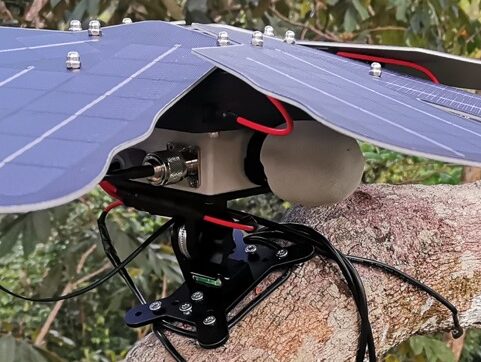
Each unit was installed approximately 1.5 meters above ground level, secured to existing tree trunks or shrubs.
Outcomes / Challenges
Outcomes:
We identified 35 species across 33 sites using algorithms and manual validations, including four species of the elusive tapaculo family.
Results show a positive relationship between tree canopy height and the number of detected species, with more species detected at sites with high canopies.
Found significant variation in soundscapes among sites with differing tree cover, suggesting that more extensive forest cover supports higher acoustic activity.
Results also show no significant correlation between soundscape composition and elevation (p = 0.262), suggesting that elevation is not a strong driver of soundscape variation in this project.
Results showed no statistically significant associations between Acoustic Space Usage (ASU) and any of the variables; models reported low ‘importance values’ for the environmental variables, indicating they were not strong predictors of ASU variability.
Challenges:
Flooding of the wetland to a depth of over 1.5 meters, which resulted in the loss of two devices.
A landslide in a ravine where a third Audiomoth device was lost.
Loss of data during data capture.
Challenges included security concerns (regional instability) and high EEB personnel turnover in early 2023, both of which affected our on-the-ground partner’s ability to deploy and retrieve Audiomoths.