Croatia
Biodiversity Monitoring in Kopački Rit Nature Park, Croatia


Overview
Rainforest Connection (RFCx), Arbimon, Fakultet Agrobiotehničkih Znanosti Osijek, Kopački rit Nature Park, and Huawei partnered on an impactful passive acoustic monitoring project in Kopački Rit Nature Park, Croatia, to better understand biodiversity patterns in the region. The goal of the present study was to use acoustic species-identification algorithms to assess the presence and distribution of wildlife, as well as the environmental factors influencing them.
RFCx provided the hardware and tools for long-term holistic biodiversity monitoring in Kopački rit Nature Park, Croatia. The three-year project was supposed to monitor 50 species across wetland and forested ecosystems. RFCx will develop a regional CNN for the species of interest to facilitate long-term monitoring.
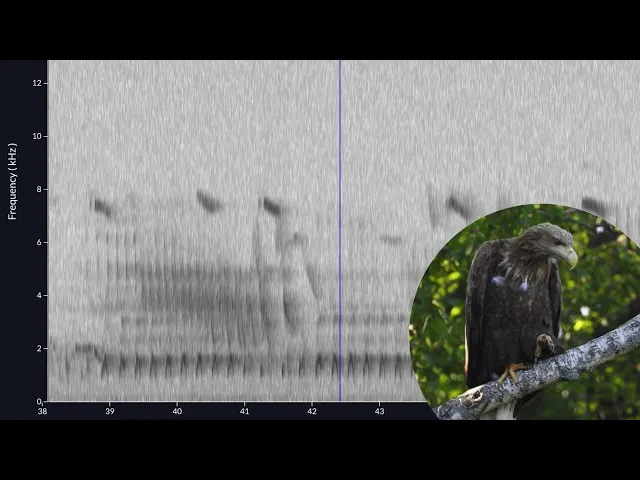
Above: Audio of a white-tailed eagle (Haliaeetus albicilla)
Partners
Fakultet Agrobiotehničkih Znanosti Osijek
Kopački rit Nature Park
Huawei



Objectives
The University team will conduct biodiversity monitoring to collect data on wild fauna, flora, and habitat diversity, with an emphasis on surveying threatened, protected, and indicator species.
Establish continuous teaching and research activities, as well as cooperation with the agricultural sector.
Develop data-enabled insights about biodiversity richness, composition, and distribution, as well as the behaviors of specific species.
The regional CNN will process the data for the second and third years of the deployment, and the results will be made available to the University.
Implementation
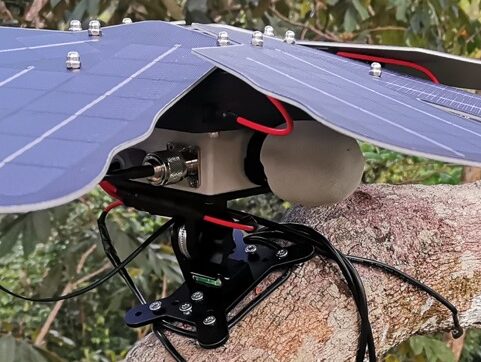
100 RFCx AudioMoth devices were spread across the wetland and forest ecosystems and left to collect data for 1 week to 10 days 3 times per year, for each of the three years of the project.
The RFCx team of expert biologists conducted a remote study of species diversity and distribution to provide an initial analysis.
The RFCx team analyzed approx. 50 species of interest and created a Regional CNN. The University team and partners were trained to deploy devices and interpret the CNN results. The process was repeated for all subsequent samplings to understand changes in species presence.
The team was trained in the first year of the project timeline to collect bioacoustics data and use the RFCx platform for biodiversity analyses.
From April to June 2023, our on-ground partners collected data at 95 sampling sites in Kopački Rit Nature Park using passive acoustic recorders. We then used an AI-powered automated species detection pipeline, in combination with ecological analyses, to derive biodiversity insights across the park.
We implemented passive acoustic monitoring (PAM) in Kopački Rit Nature Park, Croatia, from April 17 to June 30, 2023, during the birds' breeding season.
To better understand how environmental variables influence species distribution and occurrence, we extracted landscape-scale remote sensing (GIS) layers for our ecological models. We selected these environmental variables for their public accessibility and their potential to explain biodiversity patterns, as indicated by previous literature.
Experienced biodiversity scientists from the RFCx science team reviewed recordings in Arbimon. They manually detected and tagged species from one day of recordings per sampling site to create a preliminary species list and identify any issues with the recordings.
We used the validated PM detections as presence/absence data to train a Convolutional Neural Network (CNN) model to classify species from spectrogram images.
The University team strongly promoted the inclusion of biodiversity protection and conservation topics by raising public awareness and disseminating the project results and achievements.
Outcomes / Challenges
Outcomes:
We detected 75 species (67 birds, 4 mammals, and 4 amphibians) across 95 sites in Kopački Rit Nature Park between April and June 2023. These species included the Near Threatened northern lapwing and the Vulnerable European turtle-dove. The most commonly detected species were the Eurasian blackcap, common chaffinch, and great tit. We ran species identification models (i.e., Pattern Matching) for 54 of the 75 species detected and created multiple species occupancy models for 48 species.
In addition, we developed an AI model (e.g., a Convolutional Neural Network – CNN) with 53 classes (classes = species + song type) to automate species detection and classification in new recordings, minimizing the time required for future analysis.
Our findings indicate that sampling day influenced the detectability of bird species. Interestingly, none of the environmental variables we tested exhibited a significant influence on occupancy probabilities at the community level for either birds or frogs. However, at the species level, canopy height and NDVI emerged as the most influential factors driving patterns in bird species occupancy.
For frog species, distance to water and NDVI had the strongest influence on occupancy. We developed an Arbimon Insights dashboard to report on, display, highlight, and summarize the main results of this project.
We observed that variation in sampling days was the primary influence on the detectability of bird species.
At the species level, canopy height and NDVI influenced bird species occupancy, while for frogs, proximity to water sources and NDVI played pivotal roles.
This resulted in 1,725,072 one-minute recordings, which were subsequently uploaded to the Arbimon platform for analysis.
The start of this project (April) marks the beginning of spring and is when bird vocal activity is highest. This is especially true for Passeriformes, which are among the most common species in the area. We found that 3 Passeriformes had the most detections: the Eurasian blackcap (Sylvia atricapilla), common chaffinch (Fringilla coelebs), and great tit (Parus major)
The detection probabilities across bird species showed considerable variation, ranging from a low of 0.01 for the mallard (Anas platyrhynchos) to a high of 0.83 for the Eurasian blackcap (mean = 0.23; supplementary files).
The implementation of RFCx acoustic monitoring technology enabled the University of Osijek to efficiently and comprehensively study biodiversity at the sites.