Cameroon
Community-led Conservation in Mbang, Cameroon


Overview
This project aims to use remote acoustic monitoring to detect and deter illegal activities such as logging and poaching in and around Mbang, Cameroon.
Partners
ZSL
PPFCE
SFID-Mbang

Objectives
Month One: Set up guardian infrastructure
Month Two: First Month On-site: Preparation, Installation, Calibration
Month Three: Second Month On-site: Live Data, Reconnaissance, Training, Mobile App Customization
Month Four: Third Month on-site: Intervention, Finalized Training, Planning Next Steps
Implementation
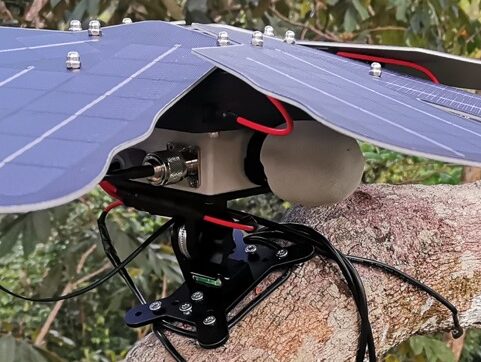
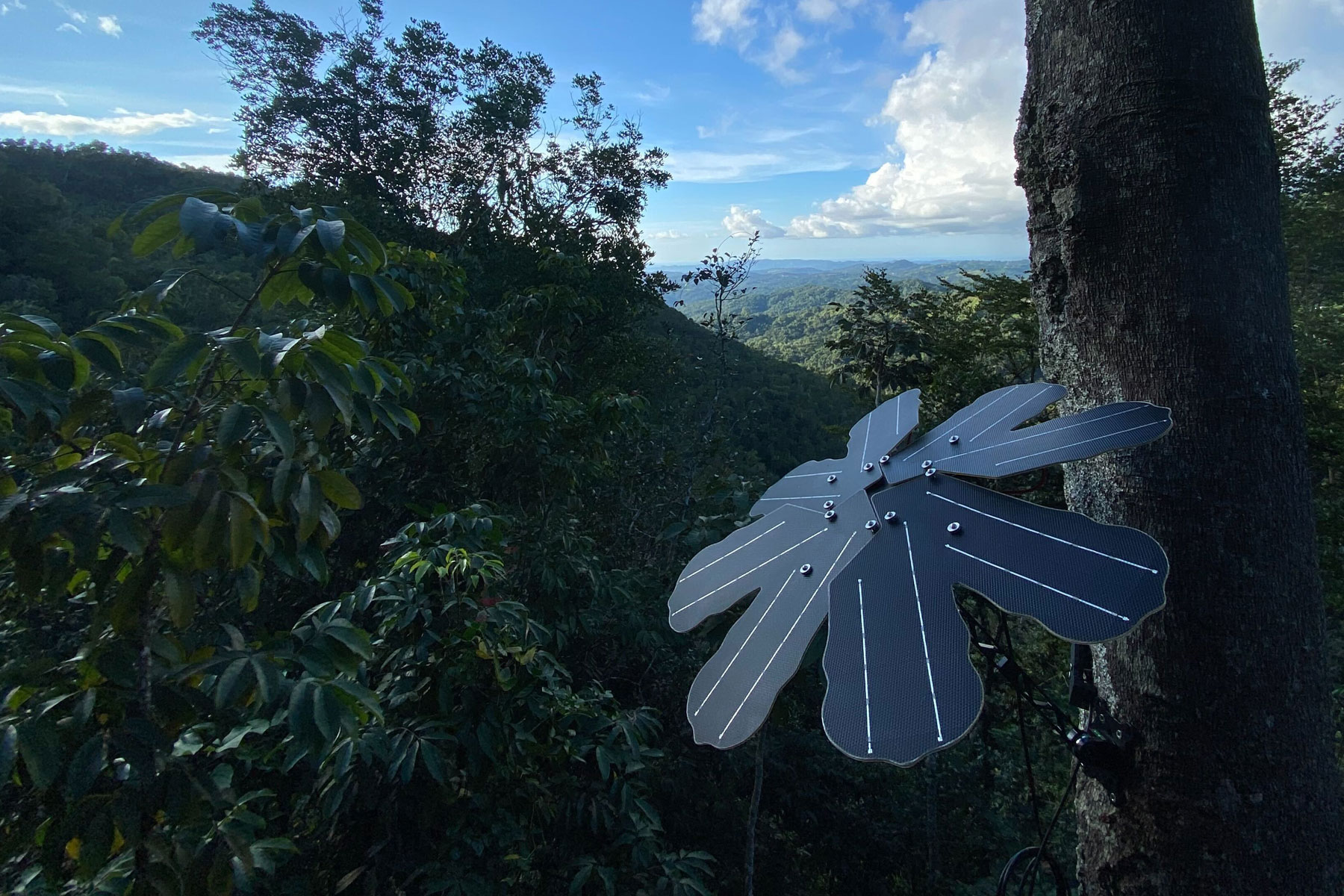
Continuous, automated, remote acoustic monitoring: Remotely installed RFCx hardware successfully captured continuous ambient forest noise for weeks throughout our testing. To underscore the accomplishment, we believe that this is the first instance of continuous 24/7 acoustic coverage of the forest surrounding Mbang, and the resultant data have already led to a number of discoveries. (See data on page X)
Automatic detection/classification of vehicle traffic: Originally designed to detect chainsaws, the RFCx system was successfully adapted to explicitly identify different types of vehicles based on sound signatures. Included in this development: motorcycles, trucks & cars (Trucks: Figure XX, Motorcycles: Figure XX). Additionally, RFCx demonstrated our ability to detect chainsaw frequencies in Cameroon. This explicit analysis, as we often refer to it, was a highlight of our work in Mbang.
Auto-support for prepaid data plans in Cameroon: For the first time in any environmental context, RFCx has developed a software technique that uses inexpensive, pay-as-you-go SIM cards to stream large amounts of data. In doing so, we can automatically transfer hitherto unprecedented amounts of raw environmental data out of the forest via the existing GSM network (approx. 200+ MB/day per device) at a cost of about 300 XAF/day. Even in our initial testing, such a technique may cut the cost of standard GSM data transfer plans by over 70%. Our software is intended to be adapted to work in other devices as well, potentially driving down the cost of other GSM-linked conservation technologies, including camera traps.
Increased GSM range & tolerance of high latency: In some instances, RFCx devices successfully transmitted data at a distance of about 40km from the nearest cell tower. Additionally, device software was improved to withstand the particularly slow/unreliable nature of network connectivity in Central Africa (including high request latencies exceeding 1-2 minutes)
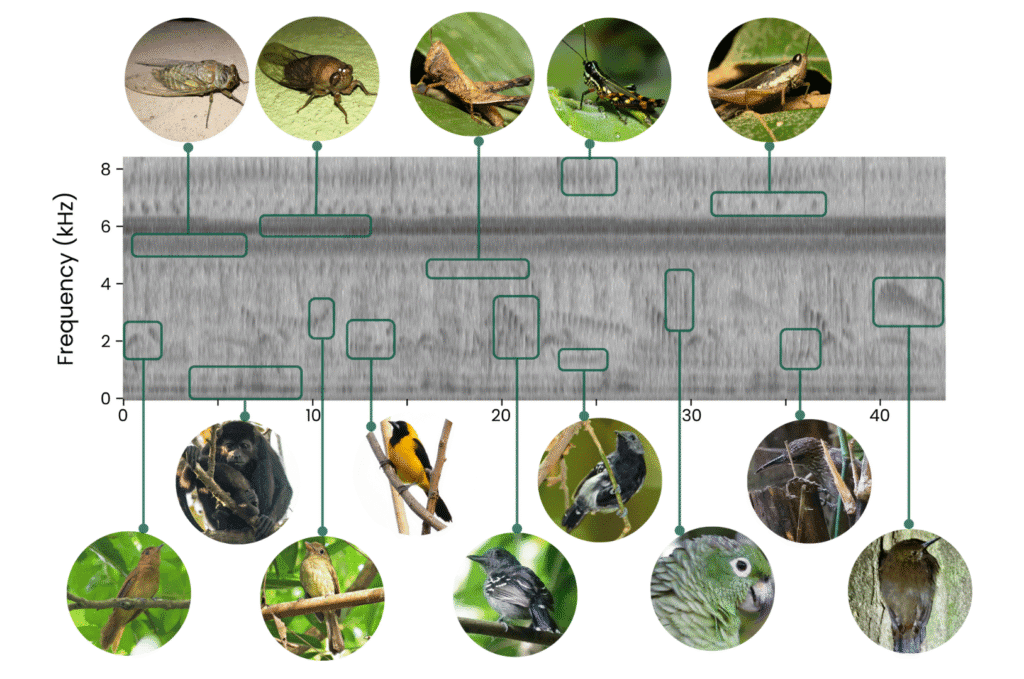
Acoustic Anomaly detection via Machine Learning: In contrast to our explicit analysis, which looks for specific noises (vehicles/chainsaws), we also successfully demonstrated an alternative acoustic analysis method that leverages modern machine-learning algorithms to detect any anomalous sounds picked up by our devices. This will lead the way toward, perhaps, voice identification and biodiversity surveys based solely on audio streams.
Manual data offloading: There will always be areas of interest within most UFAFMUs that lack cellular connectivity. During our testing, we successfully designed an alternative method for removing audio data from RFCx devices, whereby responsible agents may pass near an installed device and wirelessly offload cached data, usually in batches corresponding to days or weeks of continuous recording. This data is then later uploaded to our central database and analyzed automatically upon entry. While still under development based on our tests in Cameroon, expected extensions to this system will enable similar data retrieval strategies for passing vehicles and automated drones.
Outcomes / Challenges
Outcomes:
Successful alerts/audio analysis achieved during the testing included chainsaws (logging), motorcycles (poaching), and trucks/vehicles (logging and poaching) in key areas of the FMU.
Over the course of 3 continuous weeks of recording and monitoring, the RFCx system identified the following total number of vehicles, based on acoustic analysis of sound:
366 trucks38 motorcycles
38 cars
The SFID wildlife team also expressed a great deal of interest in using the RFCx system to capture forensic evidence of illegal activities for use in reports to outside agencies, as well as being able to cache and examine patterns of activity. In particular, capturing more information about off-hours patterns of illegal activity was considered a significant area for future impact that could yield tangible results.