Suriname
Protecting the Matawai Rainforest & Cultural Heritage in Suriname

Overview
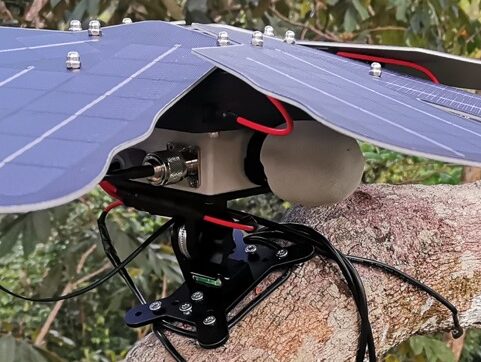
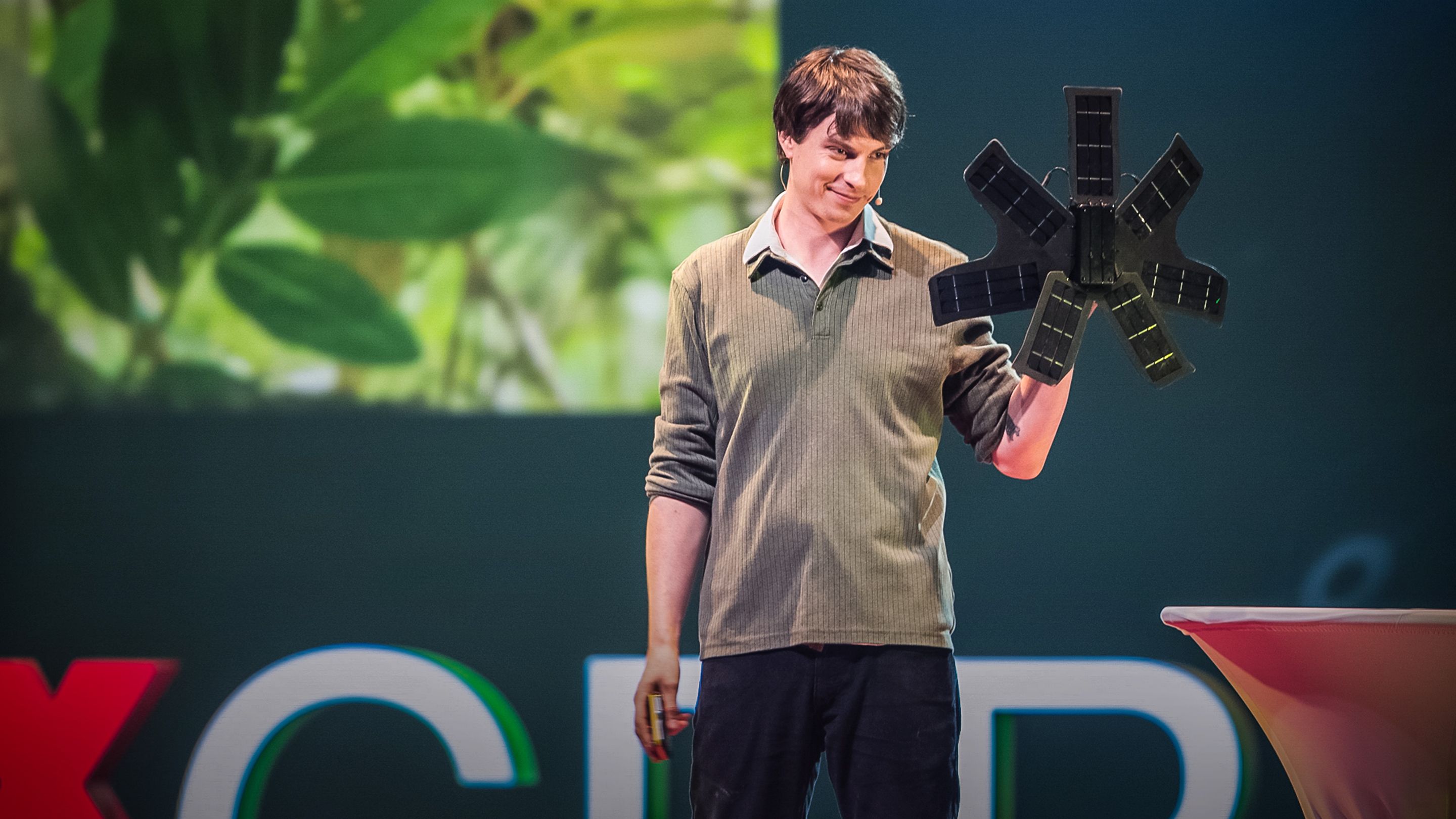
This project was developed to support and improve collaboration amongst local communities, empower local partners, and improve protection and the safety of law enforcement/rangers in the Matawai Rainforest of Suriname with the installation of the Rainforest Connection (RFCx) Guardians. The end goal is to create a comprehensive biodiversity monitoring program that allows the local partner to measure progress of wildlife restoration and recovery through principles of adaptive management and to serve as a testing ground for conservation technology that can be applied globally.
The community itself admitted they did not have the resources to manage or patrol their vast forests regularly, and so need a system of real-time alerts that will allow them to respond to trespassers and illegal loggers, whom they suspect are extracting resources from their lands.
Partners
Conservation International Suriname (CI)
‘Maroon’ Matawai Community

Objectives
Improve monitoring and protection of the Matawai site in Suriname through the deployment of autonomous acoustic monitoring technology.
Serve to support and improve collaboration amongst local communities, empower local partners, and improve protection and the safety of law enforcement/rangers.
Create a comprehensive biodiversity monitoring program that enables the local partner to measure progress in wildlife restoration and recovery using principles of adaptive management.
Serve as a testing ground for conservation technology that can be applied globally.
Directly monitor the buffer zone for the Central Suriname Nature Reserve by sustainably managing 97,000 ha of forest.
Store captured sounds in an accessible cloud-based archive for immediate and future analysis, enabling in-depth understanding of how illegal activities and species of interest are changing temporally and spatially.
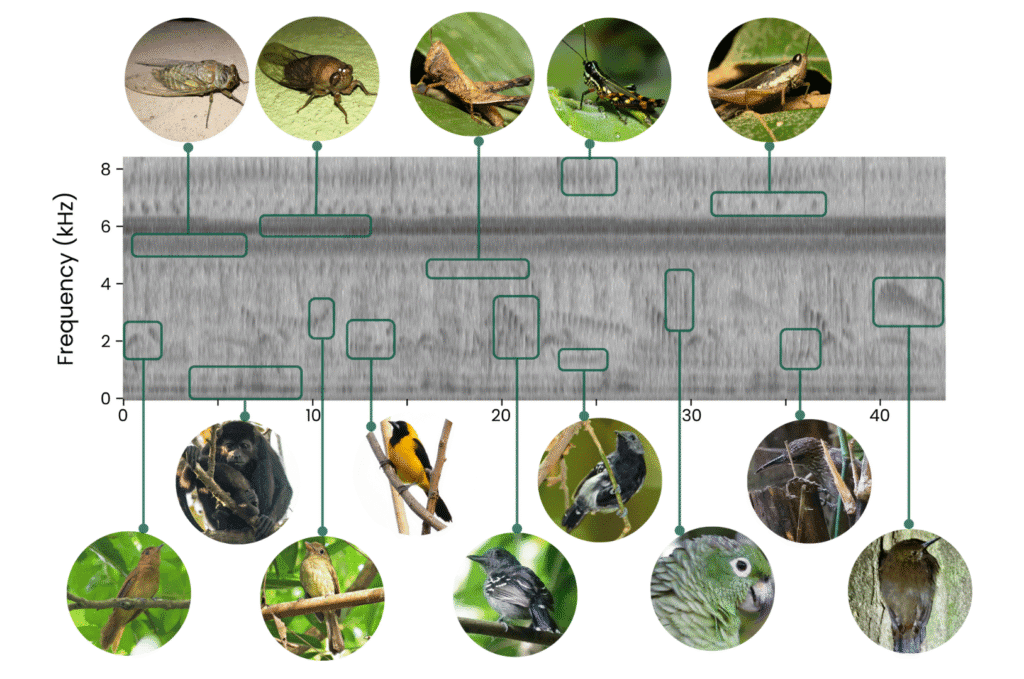
Develop an “Audio Ark” of forest sounds for biodiversity monitoring
Use the RFCx Platform to run analysis on data utilizing AI (convolutional neural network) techniques.
Capture, record, and alert for target sounds including Chainsaws, Motorcycles, Trucks, Gunshots,
Hounds, Human Presence (in development) for illegal activities
Train the Local Partners to use the RFCx Ranger Application and Dashboard system to review incoming alerts and provide species annotations for use in creating the AI models.
Capture and archive forensic evidence of illegal activity for prosecution.
Implementation
Installed 2 out of 8 planned guardians in 2020 before the team had to evacuate due to strict COVID-19 regulations and lockdown, installed 11 guardians in 2022, bringing the total number of guardians installed to 13
Decided to install guardians on the boundary of the buffer zone between the Central Suriname Reserve and the Matawai Community due to a lack of sufficient cell phone towers
Conducted a primary survey with the local partners to map and establish key nodal points for the first step of the expansion project due to the current field restrictions
50 RFCx Edge offline devices will be spread across the landscape of interest by the local team and left to record data for one to two weeks. The RFCx team of expert conservation biologists will then conduct a remote study of species diversity and distribution.
In the second step, RFCx will deploy an expansion phase of 20 real-time, permanent monitoring Guardian devices across the region to detect illegal activities and key species.
The RFCx team of expert conservation biologists will train local partners and scientists on using the system to extract insights. This training will also allow users to use the real-time, continuous-monitoring listening stations to perform analyses and access call data.
Outcomes / Challenges
Outcomes:
Installed around 13 Guardians in the buffer zone boundaries.
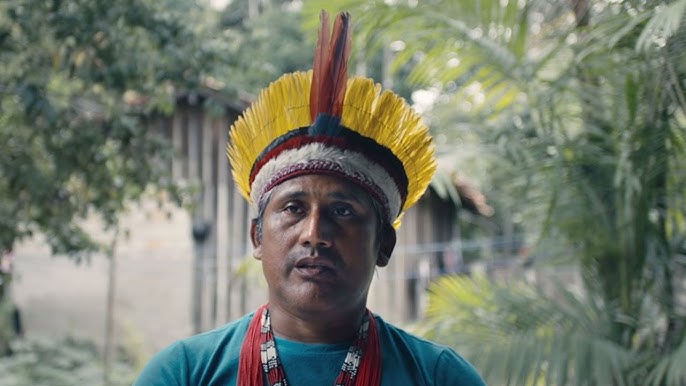
Built local capacity by training Irvin, a local Surinamese tourist guide who traditionally conducts rock climbing and zip line tours. The RFCx field installation manager provided extensive training to Irvin on installing the RFCx.
Installed Guardians in order to provide warnings if mining happens out of the concession and into prohibited areas.
Installed the Guardian in an area where logging should not be present.
Challenges:
There was only one cell phone tower in the Matawi community, which limited installations because the Matawi community's territory is very large.
All activities were halted due to strict COVID-19 lockdowns.
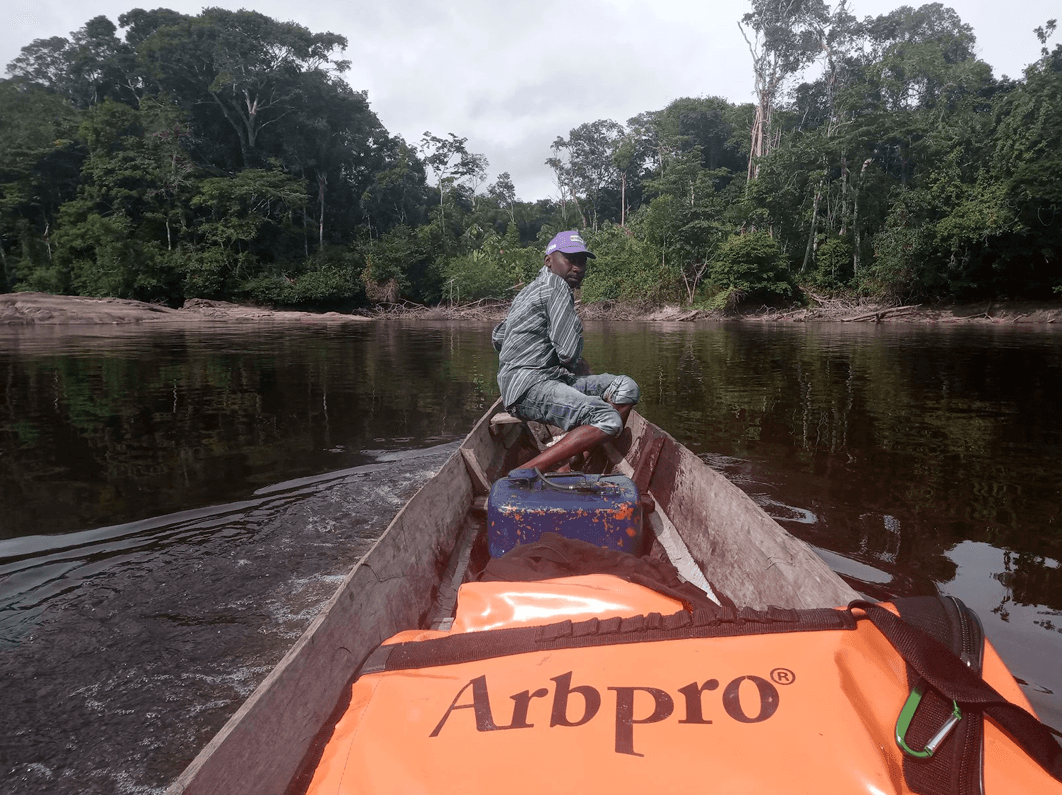
Suriname experienced an extended rainy season that led to the establishment of the National Coordinating Center for Disasters (NCCR). Reports of flooding in several affected areas, including the Matawai Community, further delayed planned fieldwork, as the roads leading to the Matawai Community were completely inaccessible.
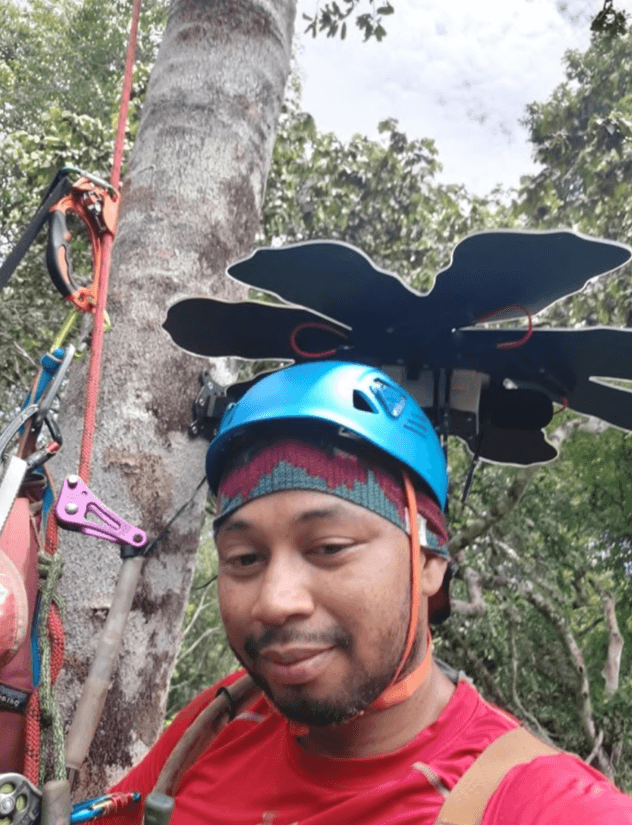
Above: Irvin after a successful installation of a Guardian