Puerto Rico
Island-wide conservation efforts in Puerto Rico


Overview
In 2021, we developed an island-wide acoustic monitoring program covering 900 sites across the Puerto Rico archipelago (including the islands of Mona, Desecheo, Culebra, and Vieques) to establish a population baseline for bird and frog species of greatest conservation need.
The aim was to significantly broaden the spatial and temporal scope of our biodiversity survey initiative across Puerto Rico by 2024. The overarching objective is to comprehensively elucidate patterns of avian presence throughout the region.
A hallmark of this proposal is the integration of passive acoustic monitoring with inputs derived from museum records and citizen science efforts. This data integration is anticipated to improve species distribution modeling and constitutes a pivotal innovation within this project.
Partners
Departamento de Recursos Naturales y Ambientales de Puerto Rico (PR DRNA)
U.S. Fish and Wildlife Service (USFWS)
Para la Naturaleza


Objectives
Evaluate species response to protected areas, restoration, and agroforestry sites, and understand population dynamics and species distribution, which is crucial for conservation planning and biodiversity preservation.
Help in prioritizing conservation efforts, identifying vulnerable species and ecosystems, and anticipating range shifts and habitat loss.
Understanding species' adaptive potential and vulnerabilities helps develop resilience strategies and promote the long-term survival of species and ecosystems in the face of climate change.
Incorporate restoration sites, always-suitable areas, and agroforestry into species distribution models.
Combine bird occupancy information from complementary data sources (e.g., acoustic monitoring, eBird, the Puerto Rico Breeding Bird Atlas, and the Global Biodiversity Information Facility to comprehensively assess the population status and distribution of birds across the archipelago in order to overcome limitations associated with individual data sources and obtain a holistic understanding of avian communities, informing effective conservation strategies and management practices.
Understand how different land-use types contribute to providing safe havens in climate change scenarios.
The detailed temporal information (5 am to 6 pm) collected over 6 months (January to June) from each site will be used to fit dynamic occupancy models that estimate colonization and extinction rates, through which we can identify areas of high turnover, prioritize conservation efforts, and assess the effectiveness of management interventions.
Implementation
We selected a subset of ~200 sites in and around six Protected Areas (Guánica, Guilarte, Maricao, Río Abajo, Susúa, and Toro Negro) to be re-sampled in 2022, 2023, and 2024 as part of the first phase of a long-term acoustic monitoring program aimed to detect animal population and community trends and patterns that could be used to inform conservation action for DRNA and USFWS.
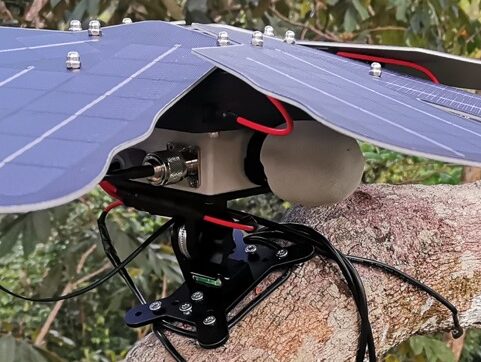
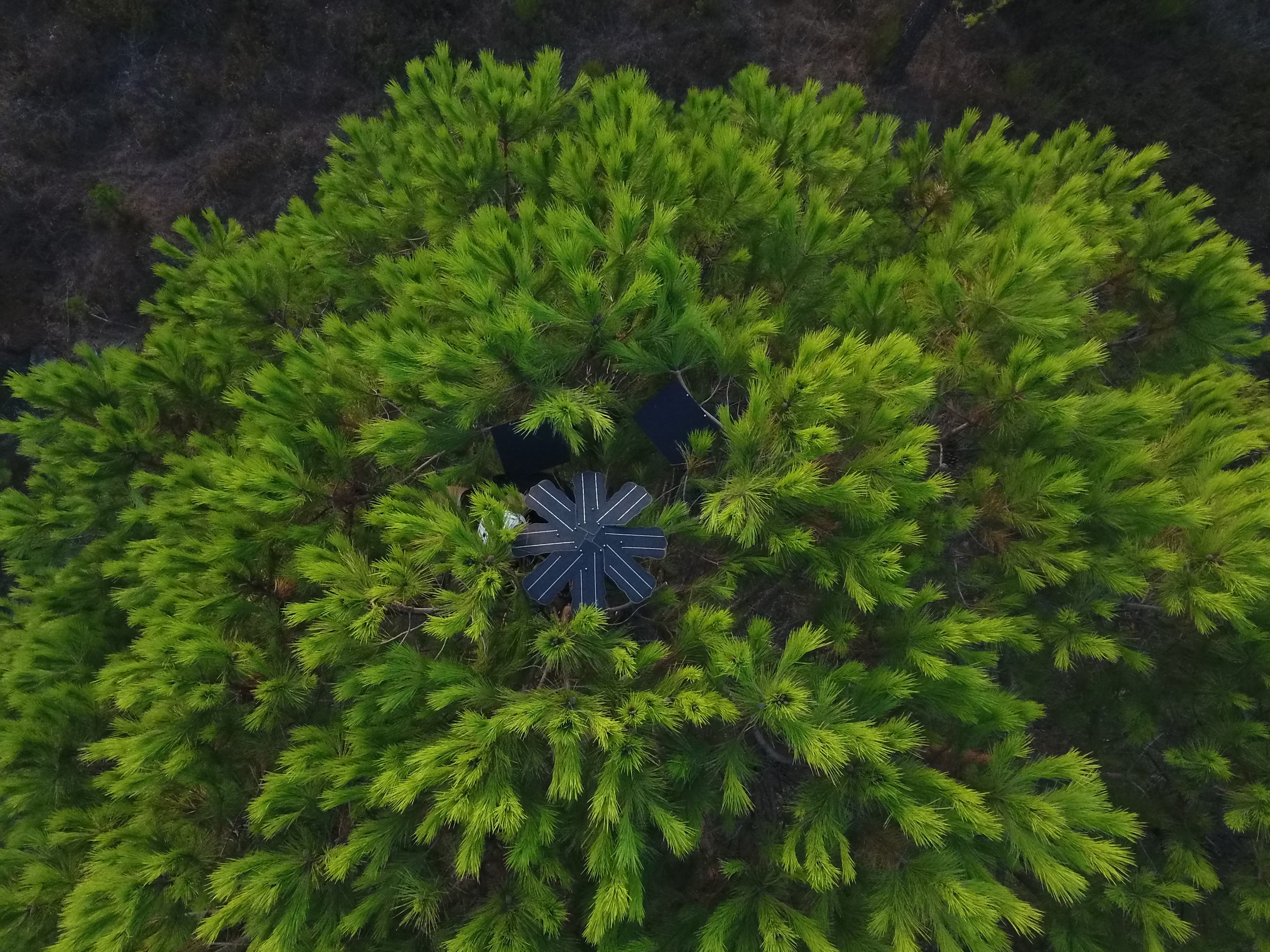
We deployed acoustic monitoring stations across different habitats and land-use types in Puerto Rico (n = 400) across the wet and dry seasons (6 months).
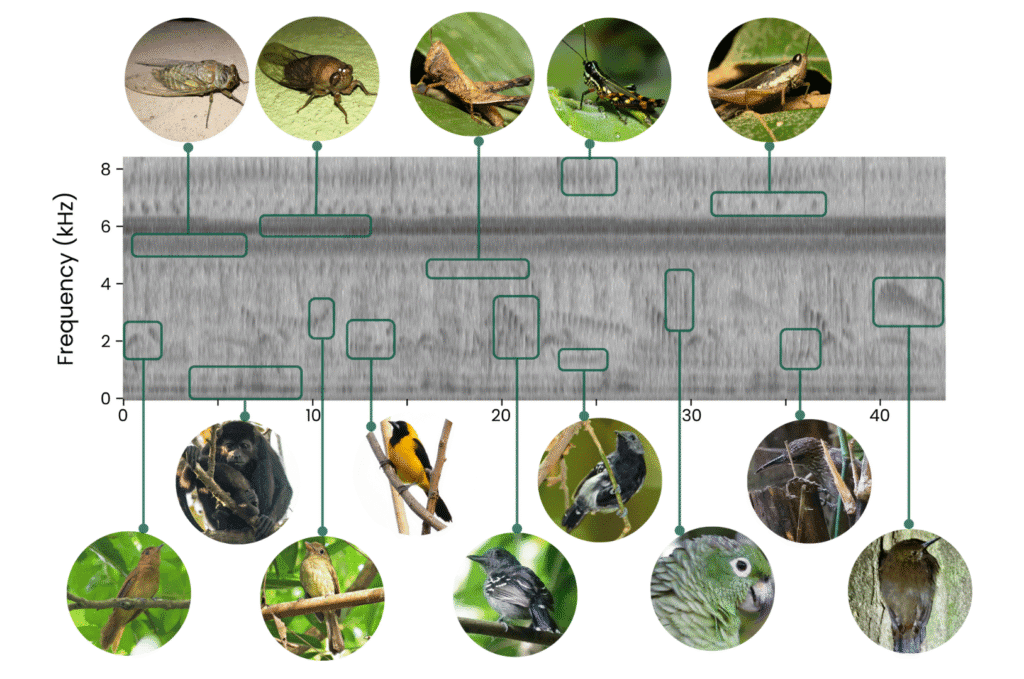
Acoustic data was used to train a convolutional neural network (CNN) to automatically detect 40 species of interest (27 birds and 13 frogs).
The original ˜900 survey sites from 2021 were to complement existing and past biodiversity sampling efforts on the island. Incorporating restoration sites, secondary forests, and agroforestry into species distribution models is vital for accurate predictions and effective conservation strategies.
Outcomes / Challenges
Outcomes:
We have found:
1) 98 species (27 endemics, 19 threatened, 16 invasives)
2) The distribution of several bird and frog species is positively affected by precipitation and the proportion of canopy cover.
3) Invasive species distribution is negatively associated with places with old forest and high canopy cover.
4) A large portion of always-suitable areas for birds is outside of current protected areas (> 75%), indicating that present protected areas will not suffice to safeguard bird species under climate change.
Our results highlight the need for long-term monitoring programs to improve our ability to disentangle the effects of climate change on species distribution and to rally all our biodiversity stakeholders to be creative, proactive, and collaborative in identifying and protecting suitable habitats for species under climate change scenarios.
This integrative approach will yield a comprehensive dataset, enabling us to generate high-resolution distribution maps, identify key hotspots of avian diversity, and detect trends in population changes.
This project's methodologies can serve as a model for similar bird conservation studies globally, showcasing the power of data integration in advancing our knowledge of avian populations and their ecological significance.