Poland
Protecting Europe's Last Primeval Forest


Overview
Rainforest Connection (RFCx), Arbimon, and Huawei Poland are partnering on an impactful passive acoustic monitoring project in Białowieża National Park to better understand biodiversity patterns in the region. The goal of the present study was to use acoustic species-identification algorithms to assess the presence and distribution of wildlife, as well as the environmental factors influencing them.
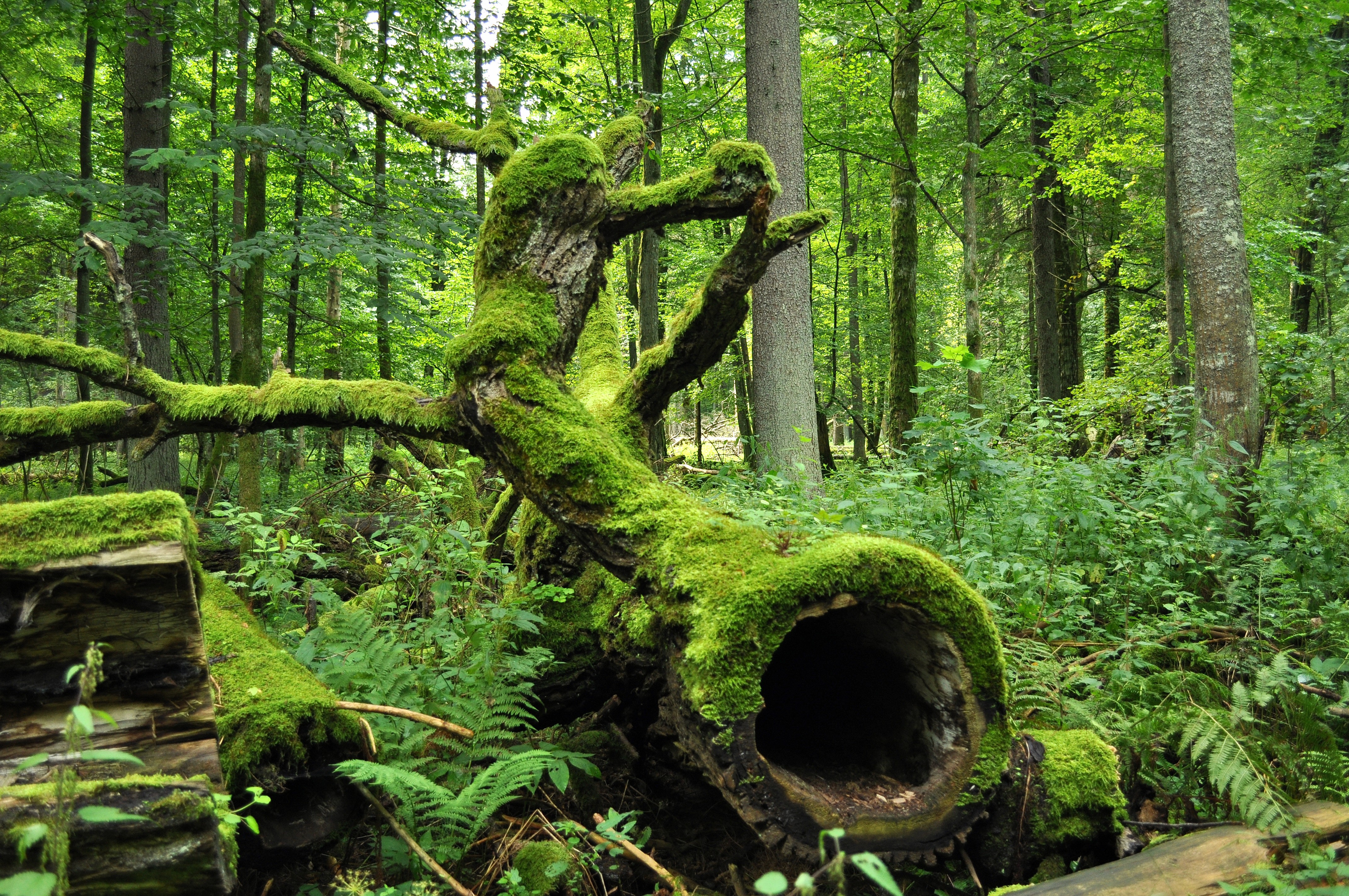
Białowieża National Park, the epicenter of biological richness in Polish forests, offers a picturesque landscape that serves as a haven for tens of thousands of organisms living peacefully, undisturbed by human interference. Since 1979, the park has been a proud feature on the UNESCO World Heritage List as one of the two natural sites in Poland, functioning in tandem with the rest of Białowieża Forest since 2014. It is celebrated as a unique exemplar of ongoing ecological processes and as an area housing representative natural habitats of immense universal value. This includes significant biodiversity typical of natural forests in the temperate climate zone.
With over a century of rigorous protection, human activity within a substantial area of Białowieża National Park has been significantly reduced. Consequently, this section of the Białowieża Forest stands as one of the few locations in Europe that still possesses the characteristics of a primeval forest.
Geographic Background:
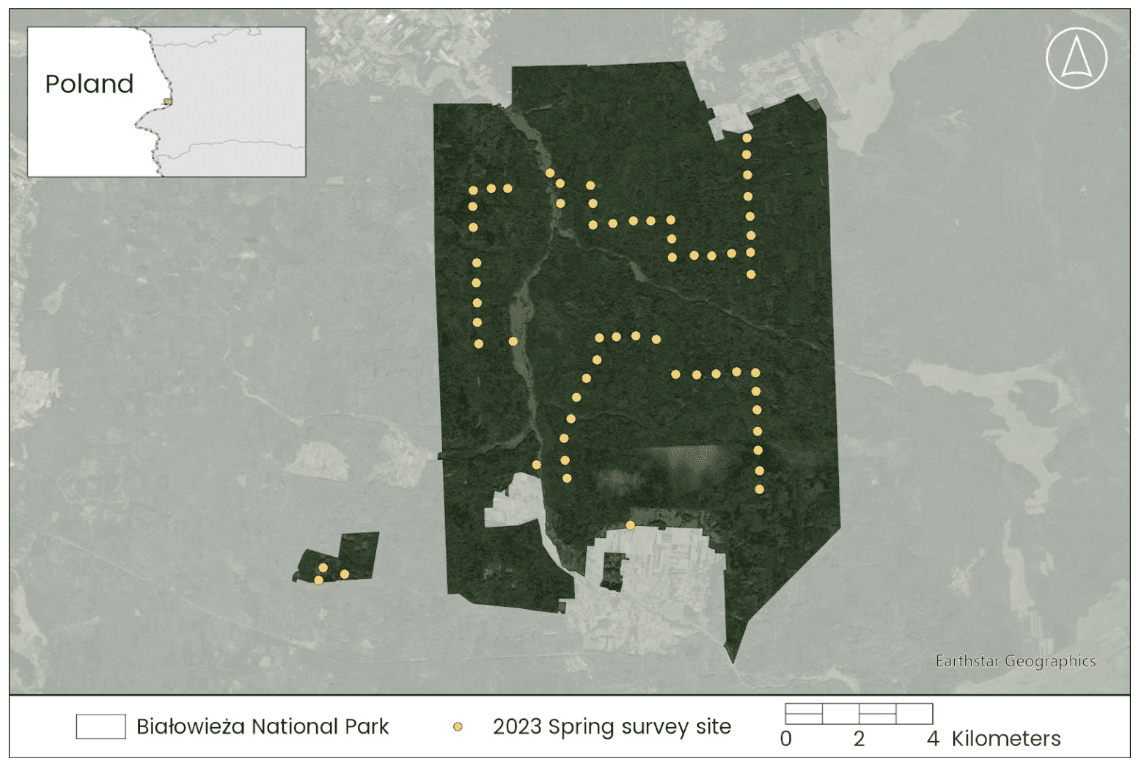
Białowieża Forest, situated on the Poland-Belarus border, is the last lowland temperate forest in Europe (Karpińska et al., 2023). Covering 142 ha of primeval forest, Białowieża National Park (BNP) hosts hundreds of bird species amid various forest micro-habitats. BNP’s bird diversity is one of the highest of any temperate forest, making it a unique wildlife and conservation hotspot.
Partners
Białowieża National Park
Huawei TECH4ALL

Objectives
The sound material collected through the TECH4ALL initiative will be used to help develop a report analyzing biodiversity in Białowieża National Park. Insights and observations will enhance the protection of rare species in the area. The Białowieża Forest, one of Europe’s last natural forests, is home to thousands of species of animals and plants, including the European bison and the Eurasian lynx. This initiative marks Huawei’s first use of technology to monitor and protect wild nature in a Polish national park.
Implementation
We implemented passive acoustic monitoring (PAM) within Białowieża National Park, Poland, from March 27, 2023, to June 9, 2023.
We used Arbimon's PM (pattern matching) to automatically identify 21 species: 17 birds, 3 mammals, and 1 amphibian. These species were selected based on two primary criteria: species' ecological traits, which help to understand overall biodiversity patterns, and availability of good species call templates.
We used a semi-automated approach to significantly reduce the time required to correctly identify species.
We developed multi-species occupancy models (MSOM) for 17 of the bird species with validated detections from PM. These models allow us to estimate the occurrence of particular species (specifically designed to address imperfect detection- false negatives- in dynamic environments).
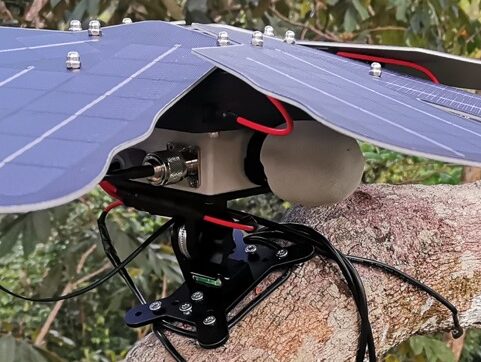
The acoustic monitoring system in the park includes 70 offline AudioMoth Edge and 3 Guardian devices designed by RFCx. The devices record nature’s sounds, especially the vocalizations of various species. Collected data is transferred to the cloud for analysis using artificial intelligence. This advanced technology facilitates real-time observation of wildlife activity, marking a significant step in the protection of unique natural areas such as the Białowieża Forest.
Outcomes / Challenges
Outcomes
Each recorder collected data for an average of 37 days, resulting in 1,081,790 one-minute recordings.
We identified 56 species (52 birds, 3 mammals, 1 amphibian), which represent about 36% of the 145 species found in Białowieża.
The mammals we detected included: grey wolf (Canis lupus), roe deer (Capreolus capreolus), and domestic dog (Canis lupus familiaris). Species from the woodpecker (Picidae) and tit (Paridae) families were the most prevalent in this study. Białowieża Forest hosts 9 woodpecker species, all native to Eastern Europe (Tomiałojć & Wesołowski, 2005). We detected 5 of these, including the comparatively rarer Eurasian wryneck (Jynx torquilla, pictured below). This is a migratory species that leaves Europe in late summer, limiting the time in which it can be acoustically detected.
We detected two game bird species, the hazel grouse (Tetrastes bonasia) and common pheasant (Phasianus colchicus), which can be hunted locally. Although the hazel grouse has a wide distribution, ranging from central Europe to Japan, it is considered locally threatened in many countries due to habitat loss and hunting.
We have developed an Arbimon Insights dashboard to report on, display, highlight, and summarize the main results of this project. This webpage allows partners to interact with the data in a non-coding, user-friendly environment, which facilitates educational applications and provides the general public with access to the results of the study, along with information on the calls, behavior, and biology of the species detected in the survey recordings
Our results reinforce the broad applicability of passive acoustic monitoring for a variety of species, including apex predators such as the grey wolf. Taken together, our results provide important insights into the presence, distribution, and occupancy of wildlife in Białowieża National Park.
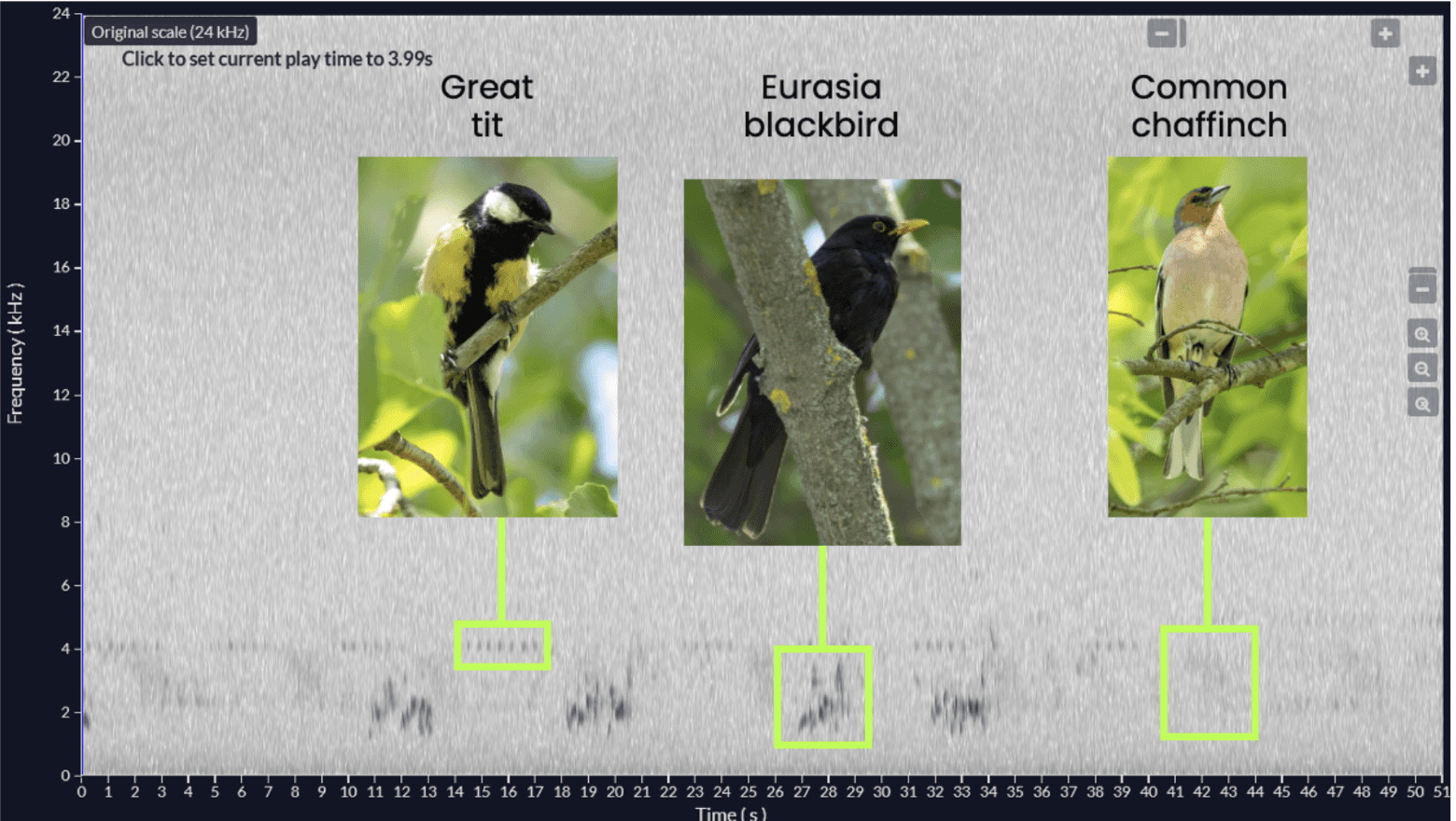
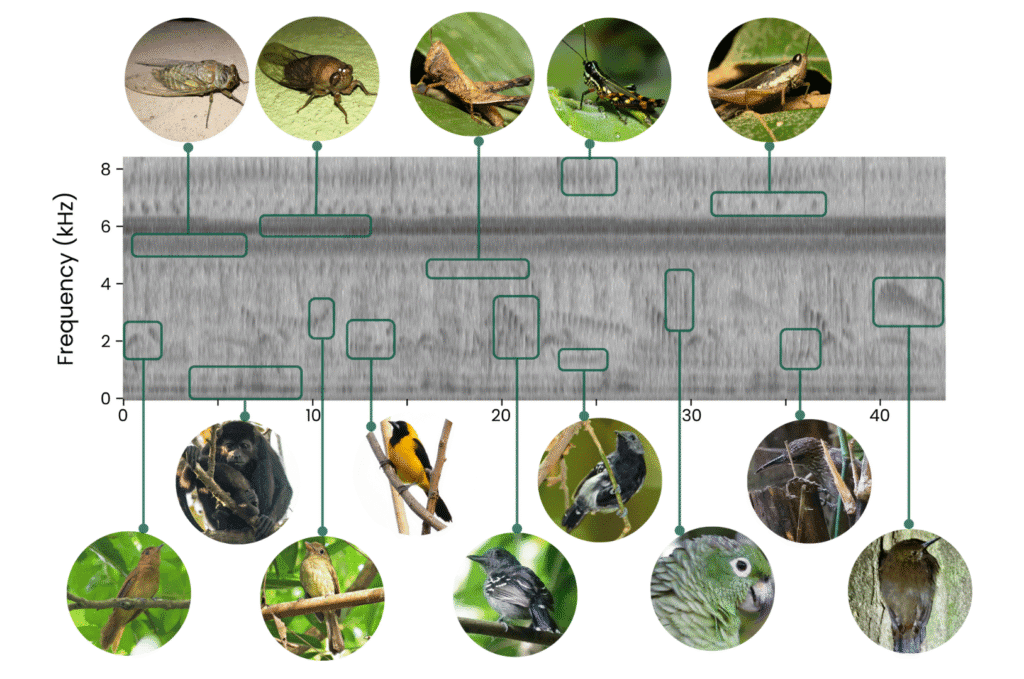
Spectrogram with species calls annotated (black boxes) from a 1-min recording collected in the Białowieża National Park.